The Headphone Bubble: Why Every Dad Needs a Pair of Noise-Cancelers and Zero Apologies
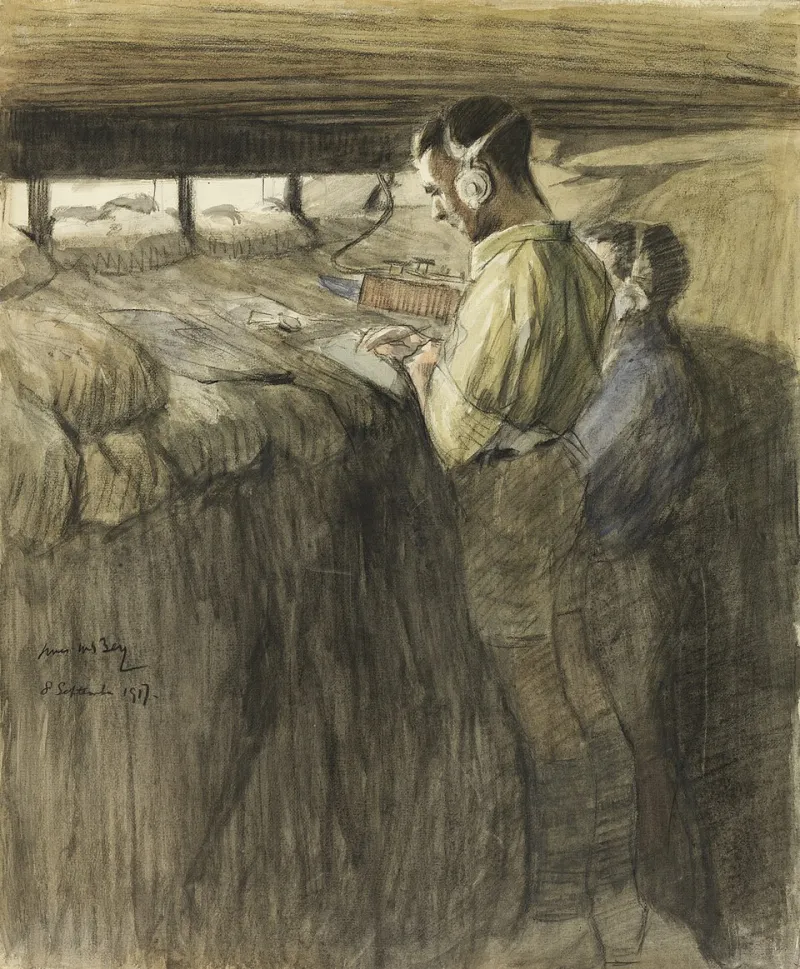
Photo: James McBey, Public domain, via Wikimedia Commons
It's 8:47 on a Saturday morning. Your youngest is watching something on the iPad that involves a cartoon character screaming at a frequency previously only detectable by dogs. Your oldest is bouncing a basketball in the kitchen — indoors, for reasons that have not been explained and will not be explained. The dog wants out. The dog wants back in. Your partner is asking if you remembered to call the plumber, and you did not remember to call the plumber.
This is your life. You love it. You also need to leave it for exactly 45 minutes without actually going anywhere.
Enter: the headphone bubble.
What the Headphone Bubble Actually Is
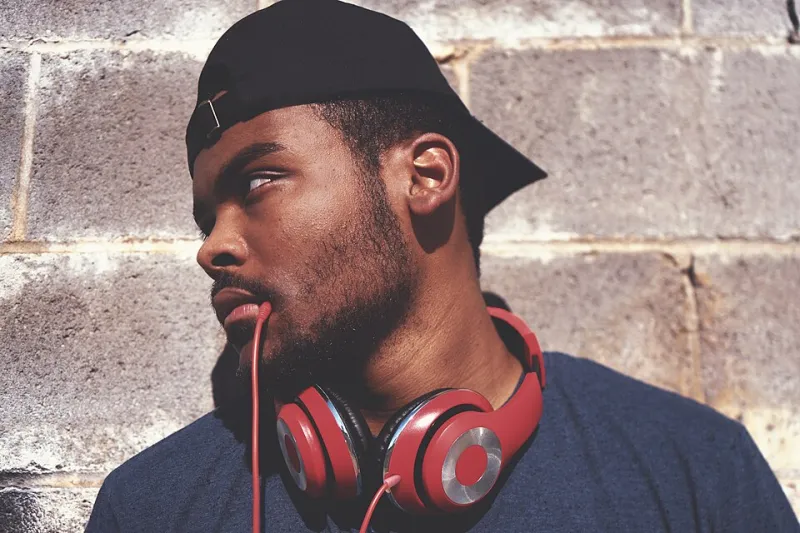
The headphone bubble isn't a product. It's a psychological state — and a legitimate one. It's that specific quality of silence-that-isn't-silence when a good pair of noise-canceling headphones locks out the ambient chaos of a house that contains children, and something genuinely great starts playing in your ears.
For a lot of dads, this is the closest thing to meditation they're going to get on a Tuesday. And that's not a failure of mindfulness practice — it's a completely rational adaptation to the reality of modern family life, where uninterrupted quiet is rarer than a parking spot at Costco on a Saturday.
The music and the technology have combined into something that functions, whether we've named it this way or not, as a genuine mental health tool. Not in a clinical sense that requires a co-pay, but in the everyday, functional sense of: this is how I reset, and it works.
The Science-ish Case for Music as Self-Care
Look, this isn't a medical journal, and we're not going to pretend otherwise. But there's a mountain of research suggesting that music has measurable effects on stress, mood, and cognitive function — and you don't need a PhD to understand why.
When you put on a record you love, your brain releases dopamine. That's the same neurotransmitter associated with eating good food, exercising, and other things that feel rewarding. The catch is that music might actually be more reliably accessible than a lot of those other dopamine triggers — you don't need gym clothes, you don't need to leave the house, and nobody needs to watch the kids while you do it.
For dads specifically — who are, statistically, less likely to seek out traditional forms of self-care and more likely to just quietly deteriorate until someone in the house notices — music is often the path of least resistance into actually feeling better. You're already doing it in the car. You're already doing it while you mow the lawn. The only upgrade is doing it intentionally, with equipment that actually honors the experience.
The Case for Spending Real Money on Headphones
Here's where we get into something that makes a lot of dads uncomfortable: spending money on themselves.
There's a specific flavor of guilt that comes with purchasing something nice that is exclusively for your own enjoyment. You'll justify a $400 grill without blinking because that's for the family. But $300 headphones? That feels indulgent. That feels like something you have to explain.
Stop explaining it. Here's the reframe: if you had a tool that reliably reduced your stress, improved your mood, made you a more patient parent and partner, and cost a one-time fee of a few hundred dollars, you would buy that tool without hesitation. That's what a quality pair of noise-canceling headphones is. It's a tool.
The Sony WH-1000XM5 and the Bose QuietComfort Ultra are the most commonly recommended options in this price range, and both are genuinely excellent. The Sony tends to win on sound quality; the Bose tends to win on comfort for extended wear. If you're sitting in a camp chair at your kid's soccer practice for two hours, comfort matters more than you think.
If the flagship price point is genuinely out of reach right now, the Sony WH-1000XM4 (previous generation) regularly goes on sale and is still one of the best headphones available at any price. The noise cancellation is exceptional. Don't let perfect be the enemy of very, very good.
The Scenarios Where This Changes Everything
Let's get specific, because the headphone bubble isn't just for sitting in a quiet room. It's for the situations where you'd otherwise be slowly losing your mind.
Kids' sports sidelines. Two hours of standing on a soccer field while a coach explains the same drill for the fourth time to a group of seven-year-olds who are mostly interested in the snacks. With headphones and a good playlist, this becomes almost meditative. You're still watching. You're still present. You're just also somewhere else simultaneously.
Home improvement projects. Painting a room, assembling flat-pack furniture, doing yard work — these are tasks that are made approximately 40 percent more bearable by having something excellent playing. This is not a controversial statement.
The commute. If you're still commuting, this is non-negotiable. The difference between arriving at work having listened to 40 minutes of talk radio versus 40 minutes of music you actually chose is measurable in your cortisol levels. Choose the music.
The 10 PM window. This is the sacred one. The kids are in bed. The house is finally quiet. You sit down with your headphones and something you've been meaning to listen to properly — a new album, an old favorite, something a friend recommended six months ago. This is the version of the headphone bubble that feels most like a genuine luxury, and it costs nothing beyond the equipment you already have.
What to Put In the Bubble
The headphone experience is only as good as what you're playing, and this is where the investment in your actual music library pays off.
For high-stimulation environments — the sideline, the project, the commute — you want something with enough energy to create a sense of momentum without requiring active attention. Indie rock, classic alternative, well-curated playlists that don't demand you think too hard. The goal is immersion, not analysis.
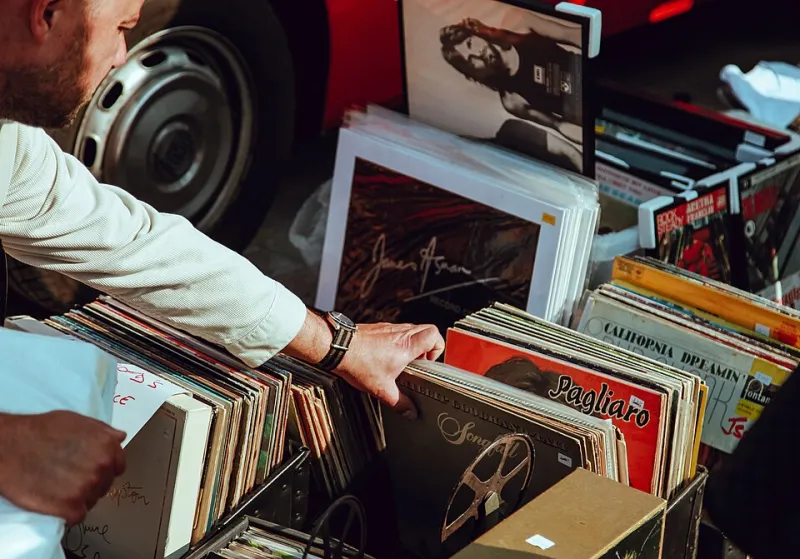
For the quiet window — the 10 PM sit-down, the early morning before anyone else is up — this is where you go deeper. Albums that reward close listening. Records with enough texture that noise-canceling headphones reveal things you've never noticed before. (Seriously, put on a record you've heard a hundred times through good headphones for the first time. It's a genuinely weird experience. You'll hear things that were always there.)
The specific music is yours to decide. That's the whole point.
Permission Granted
Here's the thing about the headphone bubble that nobody really says out loud: it works partly because it's a signal. To yourself and to everyone around you.
Putting on headphones is a physical, visible act of claiming space. It says: for the next however-long, I am doing something for me. Not for the family, not for the house, not for the job. For me.
That's not selfish. That's how you stay functional. The oxygen mask metaphor is a cliché because it's accurate — you can't pour from an empty cup, and you definitely can't fix the garbage disposal with any patience if you haven't had a single moment to yourself since Thursday.
So buy the headphones. Make the playlist. Sit in the camp chair at the soccer field and let the noise-canceling do its work.
You'll still cheer when your kid scores. You'll just do it from a slightly better mental place.