Forty Is Coming: How to Build a Music Library That Actually Defines You
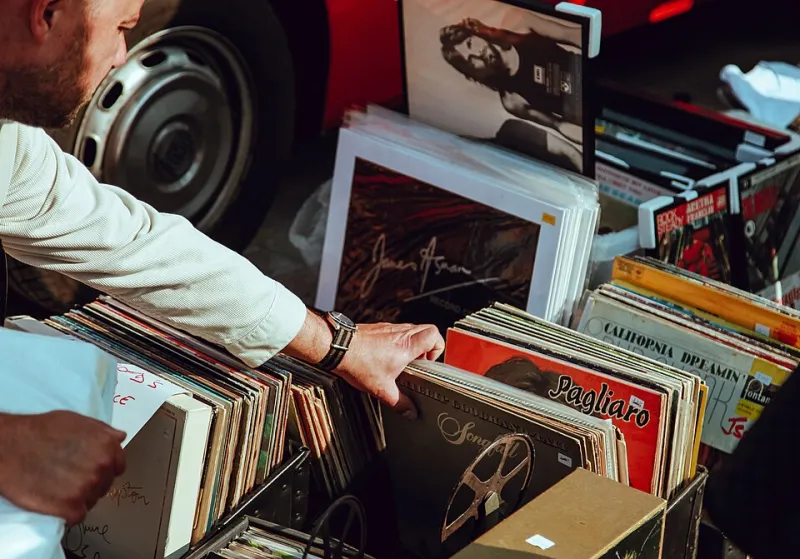
Photo: Clem Onojeghuo clemono2, CC0, via Wikimedia Commons
Somewhere between your third kid's soccer tournament and your second attempt at fixing the garbage disposal, you stopped keeping up with new music. Not because you stopped caring — but because somewhere around age 34, caring about the Billboard Hot 100 started feeling like a part-time job you never applied for.
Here's the thing nobody tells you: that's completely fine. Better than fine, actually. Because what you've been quietly doing — in the car on the way to Home Depot, on Sunday mornings before everyone else wakes up, during that sacred 11-minute window when the kids are outside and you're pretending to clean the kitchen — is curating something real. Something personal. Something that music snobs in their twenties won't fully understand for another decade.
Welcome to dadcore. And no, we're not using that word as an insult.
What Dadcore Actually Means (And Why You Should Own It)
The term gets thrown around online like it's a roast. "Oh, he listens to dadcore" — usually followed by someone listing Wilco, Bruce Springsteen, and Steely Dan like those are bad things. But here's the reframe: dadcore is simply music that has survived your actual life. It's the stuff that sounded good at 22 and somehow sounds better at 39. It's records that hit differently after you've paid a mortgage, buried a parent, or watched your kid take their first steps.
That's not a lesser form of music appreciation. That's the advanced class.
Building your essential music library before 40 isn't about chasing credibility or filling gaps that some algorithm told you about. It's about being intentional — maybe for the first time — about what actually belongs in your collection versus what you've just been tolerating.
The Foundation Records (No, You Cannot Skip These)
Every serious dadcore library has load-bearing albums. These are the records that hold the whole structure up, and if you don't have them — physically or digitally — you're building on sand.
Think about the albums that changed what you thought music could do. For a lot of guys in the 35-to-45 demographic, that's records like The Suburbs by Arcade Fire, which somehow summarized the entire experience of growing up in middle America without ever feeling cheap about it. Or Wilco's Yankee Hotel Foxtrot, which sounds like a transmission from a version of America that's simultaneously optimistic and completely falling apart — which, depending on your Tuesday, might be exactly where you're living.
Then there's the classic rock layer, and yes, it's mandatory. Springsteen's Born to Run isn't on every dad's shelf because it's expected — it's there because it's genuinely one of the greatest American albums ever made, and the older you get, the more "Thunder Road" sounds like it was written specifically about whatever you're going through. Tom Petty's Damn the Torpedoes. Fleetwood Mac's Rumours (which you should absolutely own without apology, regardless of your gender or the opinions of anyone at your office).
The foundation isn't about genre. It's about records that have proven they can carry weight.
The Overlooked Middle Layer
Here's where most guys get lazy, and honestly, it's the most interesting part of the canon to fill in.
The overlooked middle layer is everything that exists between your foundation records and whatever you've been half-listening to on Spotify for the last three years. This is where artists like Phosphorescent, Drive-By Truckers, Lucinda Williams, and the National live — records that don't always get the cultural moment they deserve but age like a really good bourbon.
The National's Boxer, for instance, is practically a document of what it feels like to be a functioning adult who is also quietly overwhelmed by everything. Matt Berninger sings like a man who just got home from a work event he didn't want to attend and has complicated feelings about it. That's not a niche audience. That's most of us.
Drive-By Truckers deserve a whole separate conversation, but start with Southern Rock Opera and work backward and forward from there. It's one of the most ambitious double albums in American rock history, and the fact that it doesn't get mentioned alongside the classic double albums is a legitimate cultural injustice.
How to Defend Your Taste at Family Gatherings
Okay, here's the practical section you actually came for.
You're at your brother-in-law's Fourth of July cookout. Someone puts on a Spotify playlist that sounds like it was algorithmically designed for a Applebee's waiting area. You connect your phone. You play something real. And then someone — it's always someone — says, "What even is this?"
Here's your move: don't apologize and don't over-explain. The single greatest mistake music lovers make at social gatherings is launching into a defensive monologue about why the thing they're playing is actually really good. That's not confidence. That's panic.
Instead, just say something like: "It's [artist]. Been listening to them for years. Great for grilling." Then go flip a burger. The music will do the rest of the work, or it won't, and either outcome is fine.
The deeper truth is that the dadcore canon earns its own respect over time. You don't have to be the hype man for Wilco at a cookout. Wilco has been doing this since 1994. They're fine.
Building the Collection: Physical vs. Digital
This is genuinely a personal decision, and anyone who tells you there's only one right answer is trying to sell you something.
Vinyl is wonderful, and if you've got the budget and the space (and a partner who hasn't yet staged a formal intervention), building a physical collection has real value — not just sonically, but as a curatorial act. Pulling a record off a shelf and putting it on is a ritual. It slows everything down. In a house full of noise and motion, that matters.
But streaming is also genuinely great for building and maintaining a library before you've committed to physical copies. Make actual playlists — not the lazy, 400-song mega-dump that becomes useless — but curated, intentional playlists organized by mood, era, or occasion. Treat your streaming library the way you'd want a record collection to feel.
The goal isn't the format. The goal is intentionality.
The 40 Threshold Is a Deadline, Not a Sentence
Here's the honest closer: turning 40 doesn't mean your musical taste calcifies. Some of the most interesting music listening happens after 40, because you've finally shed the anxiety of needing your taste to perform for anyone else.
But there's something clarifying about using the approaching milestone as a forcing function. What actually belongs in your library? What have you been meaning to explore? What records do you want to be the ones playing when your kids are old enough to ask what you were into?
Build it now. Build it deliberately. And for the love of everything, stop apologizing for liking what you like.
The lawn mower can wait fifteen more minutes.