Same Song, Different Man: Why the Music You Loved at 35 Feels Like a Stranger at 45

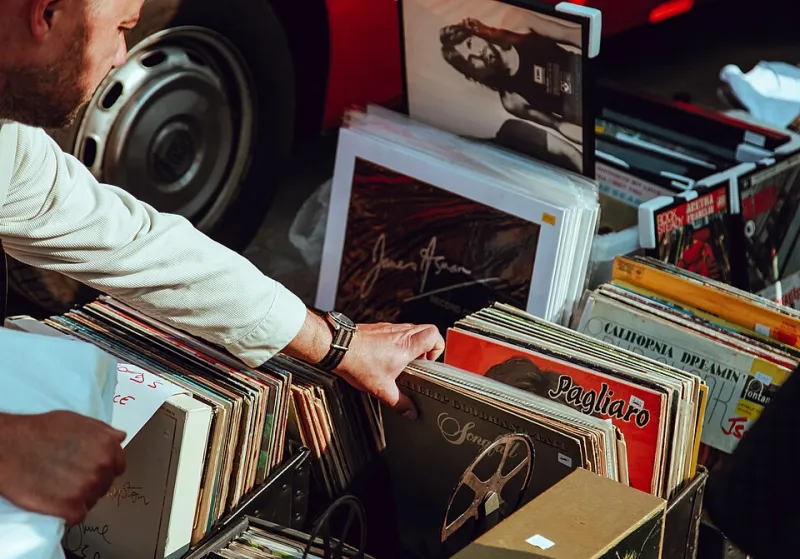
Photo by Photo by Miikka Luotio on Unsplash on Unsplash
There's a particular kind of weird that happens when you're driving somewhere forgettable — the grocery store, the hardware store, the hardware store again because you forgot the one thing — and a song you used to love comes on. Not just liked. Loved. The kind of song you played on repeat during a specific three-month window of your life when everything felt sharp and possible and slightly reckless.
And then nothing happens.
You wait for it. The chest thing. The involuntary volume increase. The brief, beautiful delusion that you are more interesting than a man currently comparing caulk prices. But the song just... plays. And you just... drive. And somewhere between the chorus and the bridge, you realize: it's gone. Whatever it was, it left without a forwarding address.
Welcome to the divorce between your ears. Nobody files paperwork. Nobody gets the dog. You just wake up one decade later and realize you and that song have fundamentally grown apart.
It's Not Nostalgia. It's Neuroscience.
Here's the part where we have to talk about your brain, which is doing things to you without your consent.
Researchers have known for a while that the music you absorb between roughly ages 12 and 25 gets encoded differently than anything you encounter after that. Your brain during those years is flooded with dopamine, building neural pathways that link songs to identity, to emotion, to the specific feeling of becoming whoever you thought you were going to be. That's why a 30-second clip of a song from high school can drop you back into a hallway you haven't thought about in fifteen years.
But here's the part nobody warns you about: the music you pick up in your thirties doesn't get the same treatment. It's still meaningful. It still matters. But it's arriving into a brain that has already done most of its heavy construction work. The wiring is different. The stakes feel lower because, honestly, they kind of are. You're not becoming someone at 35. You're mostly just managing who you already became.
So when you return to a song you loved at 35 and feel nothing at 45, it's not betrayal. It's biology. You encoded it at a time when a specific version of you existed, and that version has since been quietly retired.
The Difference Between Outgrowing and Evolving
This is where it gets genuinely interesting, and also slightly uncomfortable.
Outgrowing a song usually means the song was always serving a function more than a feeling. The aggressive stuff you played when you were stressed at work. The sad indie record you put on repeat after a breakup that has since resolved itself one way or another. The pump-up playlist that got you through a period when you needed pumping up. Those songs were tools. Useful, even great tools. But when the job is done, the tool goes back in the drawer.
Evolving is different. Evolving means your capacity for what music can do to you has actually expanded. You start hearing things you missed before — the weird chord change in the second verse, the lyric that meant nothing at 35 and means everything at 45 because you've now lived the specific thing it's describing. Songs that felt too slow or too quiet suddenly have room in them. Complexity starts to land differently.
Most dads, if they're being honest, are doing both at the same time. Outgrowing some things, evolving toward others. The playlist gets pruned and it gets richer, simultaneously. That's not a loss. That's actually the whole deal.
Why This Hits Harder for Dads Specifically
There's a reason this particular reckoning tends to show up somewhere in the 40s, and it's not just mileage.
For a lot of us, the years between 35 and 45 are the ones where life stops being theoretical. Career decisions solidify. Kids arrive or don't. Marriages deepen or fracture. Parents get older in ways you can't ignore. The abstract future you were soundtracking in your thirties has become the concrete present, and that present has different acoustics.
A song about restlessness hits differently when you've stopped being restless and started being tired. A song about searching for meaning lands differently when you've either found some version of it or quietly made peace with the search being ongoing. You're not the same audience you were. The artist made something for a person who no longer fully exists.
That's not sad. Or it's sad in the productive way, the way that makes you pay attention.
So What Do You Actually Do With This?
Option one: Let the old stuff retire with some dignity. Not everything needs to come with you into the next decade. Some songs did exactly what they were supposed to do at exactly the right time, and forcing them into a context they no longer fit is like wearing a jersey from a team you stopped rooting for. You can appreciate what it meant. You don't have to keep wearing it.
Option two: Go back with new ears, not old expectations. Some songs genuinely reward a return visit when you stop trying to recreate the original feeling and just listen to what's actually there. You might find something you missed entirely. You might find the song is actually better than you remembered, just differently good.
Option three — and this is the underrated one — use the gap as a map. The distance between who you were when you loved that song and who you are now is actual information. It tells you something about what changed, what mattered, what you traded for what. That's not nothing. That's the kind of self-knowledge most people spend a lot of money trying to excavate.
The Record Keeps Spinning
Here's the thing about musical taste that nobody in their twenties has the context to understand: it doesn't peak. It doesn't arrive at some final, correct version of itself and stop. The guys with the richest, most interesting relationships with music at 50 and 60 aren't the ones who locked in their taste early and defended it. They're the ones who stayed curious, kept letting new stuff in, and didn't mistake familiarity for quality.
Your dadbod music library is a living document. It should have things in it that embarrass the earlier version of you, and things the earlier version of you wouldn't have had the patience or the pain to appreciate yet. Both of those are evidence that you're still in motion.
The song you loved at 35 might feel wrong at 45. That's okay. Something else already sounds exactly right. You just have to go find it, probably while mowing the lawn, definitely with the volume higher than is strictly necessary.
That part, at least, never changes.