I Don't Rent My Lawnmower, So Why Am I Renting My Music?
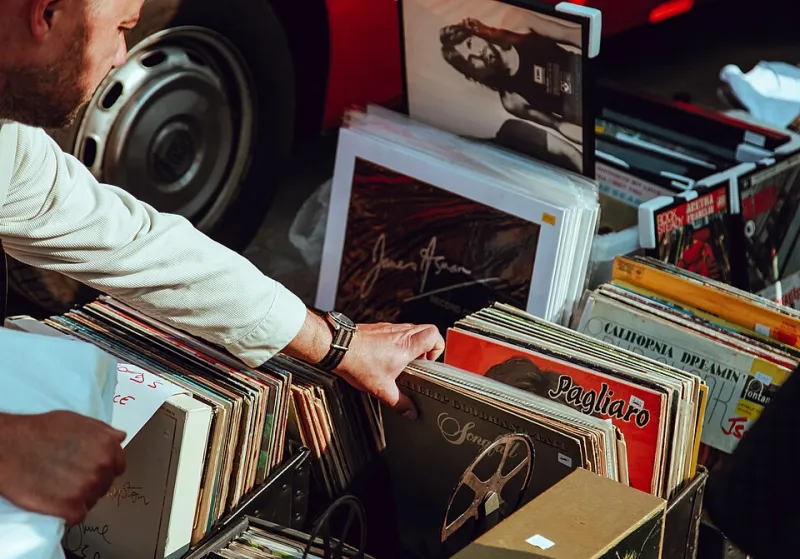
Photo: Clem Onojeghuo clemono2, CC0, via Wikimedia Commons
Let me paint you a picture. It's a Saturday morning. You've got the coffee going, the kids are still asleep, and you want to put on that one album — the one that defined your entire sophomore year of college, the one you've listened to approximately four hundred times, the one that is basically part of your DNA. You open the app. You search. And it's just... gone. Removed. Vanished like a sock in the dryer, except somehow more infuriating because at least the sock didn't cost you $10.99 a month to lose.
This is the moment a lot of dads are having right now. And it's the moment that's quietly fueling one of the most satisfying micro-rebellions of middle age: the great streaming divorce.
The Slow Burn of Subscription Fatigue
Here's the thing about streaming — it didn't feel like a trap when you walked into it. It felt like the future. Unlimited music, any time, anywhere, for less than the price of one CD a month. You were saving money. You were being smart. You told your wife about it like you'd discovered fire.
But then the price went up. And then it went up again. And again. And suddenly you're paying more per year than you ever spent on music in your heaviest record-buying years, except now you own exactly nothing. You've been a loyal customer for a decade and your music library is a house you've been renting from a landlord who can repaint the walls, change the locks, or demolish the whole building whenever the licensing agreement falls apart.
Spotify, Apple Music, Tidal — they're all running the same play. Get you hooked on convenience, then gradually raise the rent while you're too deep in playlists to leave. Sound familiar? It should. It's the same move your cable company ran on you for fifteen years.
What Ownership Actually Feels Like
There's a psychological dimension to owning music that the streaming era quietly erased, and you probably didn't notice it was gone until you felt it come back.
When you buy an album — whether it's a vinyl record, a CD, or even a FLAC download sitting on a hard drive — it's yours. Permanently. Unconditionally. No algorithm decides you haven't listened to it enough recently and buries it. No licensing dispute makes it disappear. No company going bankrupt takes it with them. You own the thing the way you own your socket wrench set: it lives in your house, it does what you need it to do, and nobody can come take it.
There's something quietly powerful about that, especially for a generation of dads who grew up building physical music collections as a form of identity. Your record shelf wasn't just storage. It was autobiography. It told people who you were before you had to say a word. Streaming turned that autobiography into a cloud-synced document that the platform technically owns the server rights to.
Going back to ownership feels, for a lot of guys, like getting a piece of themselves back.
The Real Math Nobody Talks About
Let's do some quick, deeply unsexy accounting — the kind dads secretly love.
If you've been paying for a premium streaming subscription since, say, 2015, you've spent somewhere in the neighborhood of $1,100 to $1,400 over that period, depending on when price hikes hit your account. That's a solid vinyl collection. That's a used turntable, a receiver, and a crate of albums deep enough to make your college self weep with joy. And every single one of those records would still be in your possession today, appreciating in value, gathering that specific kind of dust that feels earned.
Instead, you have a playlist called "Vibes 2019" and absolutely nothing else to show for it.
Now, to be fair — streaming has real value. Discovery is genuinely great on these platforms. Being able to sample fifty albums before you decide what you actually love is a feature that didn't exist when you were guessing based on a thirty-second listening station at Tower Records. Nobody is saying streaming is worthless. The argument is that only streaming, forever, as a substitute for ever owning anything, is a deal that gets worse every year.
The Hybrid Approach (For People Who Still Have Mortgages)
Most dads staging this quiet rebellion aren't going full Luddite. They're not canceling everything and moving into a cabin. What they're actually doing is smarter and more sustainable: use streaming for discovery, then buy the stuff that actually matters.
Find a new band on Spotify? Great. Listen to the whole catalog over a weekend. Love it? Go buy the vinyl. Or buy the digital download from Bandcamp, where the artist gets an actual cut that doesn't require a billion streams to equal a dollar. Build the owned library intentionally, around the music that genuinely means something, and stop paying a monthly fee to have access to sixty million songs you'll never listen to.
Bandcamp, in particular, has become something of a spiritual home for this movement. It's unglamorous, it looks like it was designed in 2009, and it is absolutely perfect for dads who want to buy music directly from artists without a corporation sitting in the middle taking the largest possible slice. Friday is Bandcamp Friday. Write it down. It's better than it sounds.
What This Is Really About
Honestly? The streaming divorce isn't just about music. It's about a broader, low-level exhaustion with being a subscriber to your own life.
You subscribe to watch movies. You subscribe to listen to music. You subscribe to read books, play games, get razors mailed to you, and have someone else meal-plan your dinners. At some point the cumulative monthly total of all those subscriptions adds up to a number that would make your dad — a man who owned things — deeply suspicious of your decision-making.
Owning music again is a small act of resistance against that model. It's saying: this thing matters enough to me that I want to possess it, not rent it. I want it to exist in my house, on my shelf, or on my hard drive, in a form that doesn't require anyone else's continued goodwill to access.
Your lawnmower is sitting in the garage right now. You own it. You paid for it once and it mows your grass every weekend without charging you a subscription fee.
Maybe your copy of Yankee Hotel Foxtrot deserves the same arrangement.