How to Find the Next Great Band Before Your Friends Do (Without Becoming Insufferable About It)
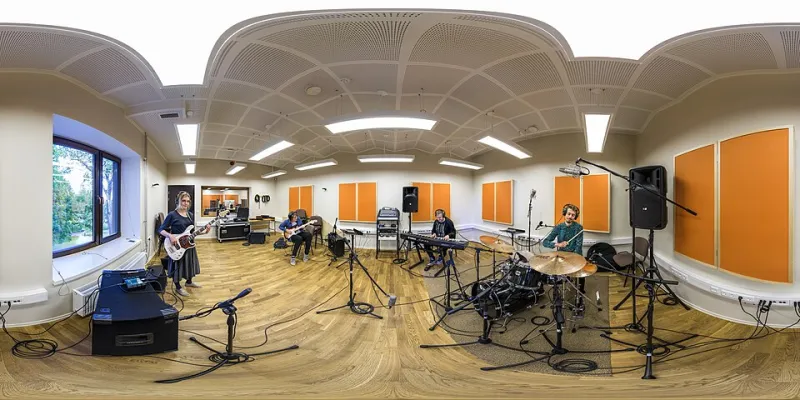
Photo: Lauri Veerde, CC BY-SA 4.0, via Wikimedia Commons
There is a very specific kind of social victory available to music fans that has nothing to do with concert tickets or vinyl collections. It is the moment, roughly eighteen months after you first heard a band, when someone else in your orbit discovers them and goes absolutely feral about it, and you get to say — calmly, without making it weird — "Oh yeah, I've been listening to them for a while."
That's it. That's the whole reward. You don't rub it in. You don't pull out a timestamped Spotify play history. You just let the sentence land and then change the subject, because you are a reasonable adult who also happens to have excellent taste.
The question is: how do you actually get there without spending forty hours a week on music forums and alienating your family?
Good news. It's easier than the music nerds want you to think.
First, Understand What "Ahead of the Curve" Actually Means
Let's calibrate expectations. You are not trying to find a band the week they record their first demo in someone's basement. That's a full-time job and it smells like mildew. You are trying to find artists in the window between "underground buzz" and "everywhere at once" — the twelve-to-eighteen-month stretch where a band has enough recorded material to evaluate but hasn't yet appeared in a car commercial or a Netflix show.
That window is more accessible than ever. The barriers between underground and mainstream have basically dissolved. A band can go from playing a 200-cap venue in Austin to a late-night TV appearance in under a year. Your job is to position yourself slightly upstream of that current, not at the source.
Your Streaming Algorithm Is a Clue, Not a Destination
Spotify's Discover Weekly and Apple Music's For You sections get mocked a lot, usually by people who use them constantly. Here's the honest assessment: they're decent at finding you more of what you already like, but they're terrible at finding you something genuinely new. They optimize for retention, not discovery.
However — and this is the part people miss — the "Related Artists" sidebar is actually useful. Not as a direct recommendation, but as a map. If you're listening to an artist you already love, click through two or three layers of related artists and you'll often land somewhere interesting. The algorithm is showing you the neighborhood. You're choosing which house to knock on.
Also worth noting: Spotify's editorial playlists — specifically "Fresh Finds" and its genre variants — are curated by actual humans whose job is to identify emerging artists. These are not the same as the algorithmic playlists. They update weekly and they're genuinely trying to surface new material. Bookmark them and check in every couple of weeks.
The Festival Lineup Trick Nobody Talks About
Major festival lineups are published months in advance, and they are essentially a curated list of artists that booking agents — people who spend their entire professional lives tracking emerging music — believe are about to matter.
Here's the move: when a festival like SXSW, Pitchfork Music Festival, Bonnaroo, or even regional events like Forecastle or Pickathon drops their lineup, ignore the headliners entirely. Scroll to the bottom. Find the names you don't recognize in the smallest font. Pick five and spend fifteen minutes with each one.
Booking agents don't put unknowns on festival stages out of charity. They put them there because something is happening. You're reading the same intelligence report they are, just a few months after they wrote it.
SXSW in particular is worth paying attention to even if you've never been and never plan to go. The official showcases list thousands of artists, and the ones who get invited are typically in exactly that sweet spot: proven enough to perform professionally, not yet famous enough for anyone outside the industry to know their name.
TikTok Is a Signal, Not a Source
This one requires nuance. TikTok has a reputation for manufacturing overnight sensations who disappear just as fast, and that reputation is partially deserved. A song going viral on TikTok does not automatically mean the artist behind it has a career.
But here's the distinction worth making: there's a difference between a song going viral and an artist building momentum. When a TikTok trend leads you to a song, the question to ask is not "Is this song popular?" but "Does this artist have a body of work, a consistent sound, and an audience that was there before the clip?"
If the answer to all three is yes, that's a legitimate signal. Artists like Phoebe Bridgers, boygenius, and Wet Leg all had meaningful underground followings before any algorithm-driven moment amplified them. The TikTok clip was a door, not the building.
When you find a song through TikTok, spend five minutes on the artist's actual catalog before deciding whether to invest. If there's depth there, you've found something real. If there are two songs and a lot of promotional content, you've found a marketing campaign.
Music Journalism Still Works, You Just Have to Know Where to Look
The music press has contracted significantly over the past decade, but what's left is often genuinely good at identifying cultural moments before they go mainstream. A few specific sources worth bookmarking:
Stereogum has a consistent track record of covering artists early, particularly in indie, alternative, and post-punk spaces. Their "Premature Evaluation" column reviews albums in their first week and often surfaces things the larger outlets won't touch for another year.
Gorilla vs. Bear is a blog that has been running since 2005 and remains one of the better early-detection systems for indie and electronic music. It updates less frequently than it used to, but when it does, it's usually worth reading.
NPR Music's Tiny Desk Concert archive is a useful retrospective tool. Search for artists you've recently discovered and check whether they've done a Tiny Desk. If they have and you've never seen it, watch it. If they haven't yet, that absence might mean they're still early enough to be interesting.
Local alternative weeklies — wherever they still exist — cover regional scenes that national outlets ignore. Austin Chronicle, Chicago Reader, Nashville Scene. If a band is getting written up in their hometown press with real enthusiasm, that's often the first chapter of a larger story.
The Anti-Gatekeeping Rule
Here's the part that actually matters, and the part that separates a music fan from a music snob: when you find something good, share it without conditions.
The whole point of discovering music early is the pleasure of passing it along. Make the playlist. Send the link. Play it in the car. Don't preface it with a lecture about how you found it first or how it's better than what everyone else is listening to. Just say "I think you might like this" and let the music do its job.
The goal was never to win. The goal was to find something great and give it to someone who needed it. The finding-it-first part is just a fun bonus.
A Practical Starting Point
If you want to put this into action this week without any major time investment, here's a simple sequence:
- Open Spotify, find an artist you genuinely love, and spend ten minutes clicking through their related artists two layers deep.
- Look up the lineup for one upcoming festival — any festival — and pick three small-font names to investigate.
- Subscribe to Stereogum's email newsletter. It comes once a week and takes four minutes to read.
That's it. You're now operating with better music intelligence than roughly ninety percent of casual listeners. The bands are out there. They're playing small rooms right now, recording in home studios, getting written up in local papers nobody outside their city reads yet.
All you have to do is look slightly sideways from where everyone else is looking.